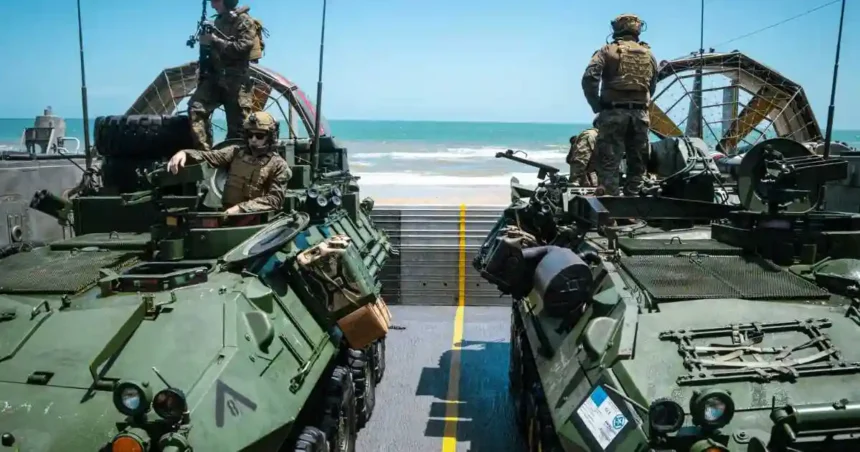
The U.S. has significantly expanded its military presence in Puerto Rico, deploying F-35 fighter jets, naval warships, and Marines as part of a strategy to counter drug trafficking networks and address growing instability linked to Venezuela. The move, while strengthening Washington’s defense posture, has sparked debate over regional security, geopolitics, and Puerto Rico’s role in America’s military strategy.
Naval Strike Escalates Regional Tensions
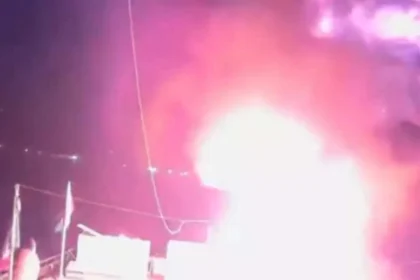
The expansion comes shortly after a U.S. naval strike in the Caribbean targeted a suspected Venezuelan drug vessel, killing eleven people. Officials described the operation as part of a broader crackdown on cartel networks that have turned Caribbean waters into a major drug transit corridor.
While Washington views the strike as a necessary step to secure its borders, regional analysts caution that such operations could inflame tensions with Venezuela and increase the risk of wider conflict.
Pentagon Eyes Puerto Rico as Strategic Hub
Defense Secretary Pete Hegseth and Joint Chiefs Chairman Gen. Dan Caine visited Puerto Rico this week to assess military installations and outline the island’s evolving role in U.S. security strategy. Pentagon sources confirmed that Puerto Rico is being positioned as a central hub for counter-narcotics operations, intelligence gathering, and rapid deployment missions.
By anchoring more advanced forces on the island, U.S. officials believe they can respond more effectively to threats across Latin America and safeguard critical maritime routes.
Geographic Advantage Strengthens U.S. Strategy
Military experts emphasize that Puerto Rico’s location at the crossroads of the Caribbean and Latin America makes it uniquely valuable. Its proximity to Venezuela, Colombia, and key Atlantic trade corridors allows the U.S. to maintain a forward base capable of deterring hostile actors and securing regional stability.
“Puerto Rico provides the U.S. with unmatched reach and speed of response in the Western Hemisphere,” noted one defense analyst. “This is not just about narcotics it’s about securing influence in a region where external actors like China and Russia are also making moves.”
Debate Over Expanding Military Footprint
The expansion has ignited debate both in Washington and the Caribbean. Supporters argue that stronger Puerto Rico military operations are essential for border protection, reducing drug trafficking, and stabilizing the region.
Critics, however, warn that an enlarged U.S. presence risks escalating confrontations with Venezuela and alienating neighboring countries wary of American interventionism. Some foreign policy experts have also raised concerns about the long-term implications of militarizing Puerto Rico’s role in U.S. defense
Mixed Reactions Among Puerto Ricans
Within Puerto Rico, the response is divided. Some residents welcome the potential economic benefits of military investment, including infrastructure upgrades, job opportunities, and federal spending.
Others are uneasy about becoming a staging ground for U.S. military operations. Activists argue that Puerto Ricans, who lack voting representation in Congress, are being drawn into conflicts over which they have little political influence.
What Comes Next?
The Pentagon has not disclosed whether further troop deployments or base expansions are planned, but officials confirmed that additional training exercises and intelligence operations will increase in the coming months.
As the U.S. doubles down on its military presence, the Caribbean finds itself at the center of a delicate balance—between combating drug trafficking, deterring regional instability, and avoiding the risk of escalating into broader geopolitical confrontation.