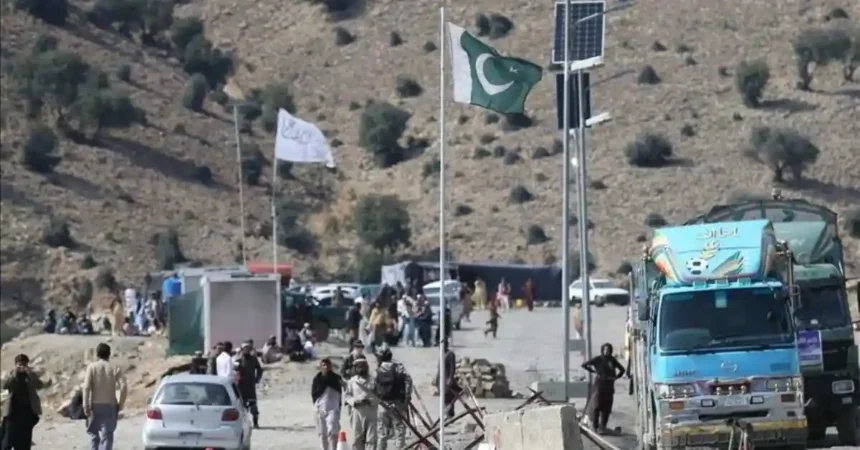
At least 12 Pakistani soldiers and 35 militants were killed in a series of Pakistan-Taliban clashes during counterterrorism raids in Bajaur and South Waziristan. The operations were launched after intelligence reports confirmed Tehreek-e-Taliban Pakistan (TTP) fighters were planning attacks near the Afghan border. Pakistan has also accused Afghan nationals of assisting militants, demanding Kabul take responsibility as violence surges after the breakdown of a 2022 ceasefire. These Pakistan-Taliban clashes underscore the continuing security challenges along the border.
Major Counterterrorism Raids Launched
Bajaur District Operation
Pakistani security forces launched an intelligence-based raid in Bajaur district following reports of a major TTP plot. As troops approached the hideout, intense gunfire erupted, leading to the death of 22 militants in the Pakistan-Taliban clashes. Security forces seized large caches of weapons, explosives, and encrypted communication devices, cutting off key militant supply routes in the area.
South Waziristan Encounter
Another raid unfolded in South Waziristan when troops surrounded a suspected TTP hideout. Fierce clashes broke out, leaving 13 militants dead. However, 12 Pakistani soldiers also lost their lives in the line of duty. The military lauded their sacrifice, calling them heroes who defended the nation against terrorism during the deadly Pakistan-Taliban clashes.
Violence Surges After Truce Collapse
Ceasefire Breakdown in 2022
The fragile ceasefire between Pakistan and the TTP collapsed in November 2022, ending months of reduced hostilities. Since then, the group has intensified attacks on security forces, checkpoints, and administrative buildings, particularly in Khyber Pakhtunkhwa province. Analysts warn that the breakdown has emboldened militants, increasing the frequency and intensity of Pakistan-Taliban clashes.
Militant Activity Intensifies
Border districts have become the epicenter of insurgent activities, with militants exploiting mountainous terrain for cover. Security officials say the difficult geography allows fighters to stage attacks before retreating across the border. The growing threat has prompted the army to deploy more troops and step up surveillance operations to curb ongoing Pakistan-Taliban clashes.
Alleged Afghan Involvement
ISPR’s Strong Allegations
The Pakistani military has accused Afghan nationals of actively assisting TTP fighters involved in recent attacks. Intelligence agencies revealed militants are using sanctuaries inside Afghanistan to plan and launch cross-border raids, posing a major security challenge during the Pakistan-Taliban clashes along the border.
Call for Kabul’s Responsibility
Islamabad has urged the Afghan Taliban government to prevent its territory from being used against Pakistan. Officials warned that continued militant activity could strain diplomatic ties and undermine regional trade and security cooperation if immediate steps are not taken by Kabul to control Pakistan-Taliban clashes.
Pakistan’s Intensified Military Response
Follow-up Sanitisation Operations
After the initial raids, Pakistan’s army launched extensive sanitisation missions across Bajaur and South Waziristan. Troops are dismantling bunkers, destroying weapons caches, and targeting remaining militant hideouts to prevent fighters from regrouping after the deadly Pakistan-Taliban clashes.
Intelligence-Based Targeting
Military officials emphasized the use of drones, satellite surveillance, and on-ground intelligence to locate insurgent leaders. This strategy ensures precision strikes while minimizing civilian casualties during Pakistan-Taliban clashes in conflict-affected districts.
Regional and Global Security Concerns
Allegations Against India
Pakistan has also accused India of secretly supporting the TTP and Baloch separatists, a charge India denies. Security experts fear such allegations could escalate tensions between the two nuclear-armed neighbors, particularly amid ongoing Pakistan-Taliban clashes along the border.
Wider Security Implications
Rising militancy threatens regional projects like the China-Pakistan Economic Corridor (CPEC), a key trade route linking South Asia to global markets. Experts warn that sustained Pakistan-Taliban clashes could deter foreign investment and weaken economic stability in the region.
Humanitarian and Civilian Impact
Displacement of Locals
Military operations have forced thousands of families in Bajaur and South Waziristan to flee their homes. Temporary shelters are filling rapidly as civilians fear renewed fighting and worsening security conditions due to the persistent Pakistan-Taliban clashes.
Economic Life Disrupted
Frequent curfews and road closures have paralyzed economic activity in Khyber Pakhtunkhwa. Local traders report falling revenues, disrupted supply chains, and declining cross-border commerce as Pakistan-Taliban clashes continue to impact daily life.