Every message we send today carries something valuable. It might be a private conversation, a file from work, or a detail that you never want exposed. We live in a world where communication moves faster than ever. That speed is amazing, but it also comes with danger. Trust has become the currency of the digital age, and protecting that trust is becoming harder each year.
- Overview
- The Rise of Digital Communication
- What Is a Messaging Security Agent?
- Why Securing Messaging Platforms Is Essential
- How a Messaging Security Agent Works
- Examples of Threats Prevented by Messaging Security Agents
- Why Businesses Rely on Messaging Security Agents
- The Human Element: Why Users Still Matter
- The Future of Messaging Security
- Conclusion: The Silent Guardian of Digital Trust
- FAQs
Hackers and cyber criminals are not just targeting big companies anymore. They are going after anyone who uses a phone or computer. That is why secure messaging is no longer optional. It is a requirement for safe digital living.
Your messages deserve the same level of protection as your bank account.
Overview
A messaging security agent is a powerful tool created to protect conversations, detect threats, and keep communication safe across apps and platforms. It acts as a digital guardian that watches for danger without interrupting your daily routine. You probably never notice it, but it makes sure every message stays private and secure.
The Rise of Digital Communication
Over the last decade, our communication habits have changed. We used to rely on calls and emails. Now most of our conversations happen inside apps like WhatsApp, Messenger, Telegram, Slack, and dozens more. People share personal stories, business plans, passwords, photos, financial details, and even confidential documents through these platforms.
That shift is convenient, but it has opened a massive door for cyber attacks. Criminals know that messaging apps are used every second across the world. They try to slip in through fake links, harmful files, or impersonation tricks that look real. As more people depend on digital messaging, the risks continue to rise. This is where a messaging security agent becomes vital. It adds a layer of protection that humans cannot provide alone.
What Is a Messaging Security Agent?
A messaging security agent is a specialized system designed to safeguard chats, messages, files, and real time communication from cyber threats. You can think of it as a smart digital shield. It runs quietly in the background and looks for anything suspicious.
Here is what it typically does:
• Detects phishing attempts inside chat messages
• Blocks malware hidden in files
• Scans links before you open them
• Verifies identities to prevent impersonation
• Encrypts communication so no one can spy on it
• Alerts users when behavior looks unusual
Instead of depending on old security talls that only protect emails, a messaging security agent focuses directly on modern messaging platforms. This makes it more accurate, more proactive, and much more essential for businesses and individuals.
Why Securing Messaging Platforms Is Essential
Messaging platforms are the new workplace. Employees share ideas, managers send instructions, and clients communicate through chat tools daily. Even personal conversations contain sensitive information like home addresses, photos, payments, and private plans.
If these platforms are not secure, anything can be stolen. Ewan one compromised message can lead to financial loss, identity theft, or leaked company data. Many attacks start with a simple chat message that looks innocent. This is why messaging security matters so much.
Security is not just about keeping hackers out. It is also about keeping trust strong. When people know their messages are safe, they communicate confidently.
How a Messaging Security Agent Works
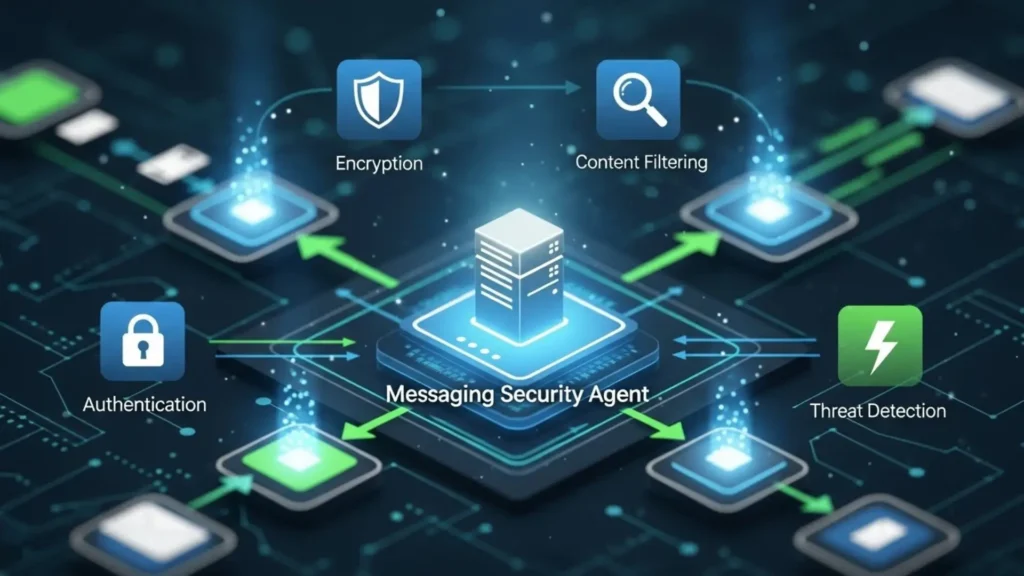
A messaging security agent uses a mix of technology and real time intelligence. Here is a simple breakdown of how it works behind the scenes.
1. Encryption
It protects messages by scrambling them, making them readable only to the sender and receiver.
2. Threat Detection
It scans incoming and outgoing messages for suspicious patterns, harmful links, or dangerous attachments.
3. Identity Verification
It checks if someone is pretending to be you or someone in your contact list.
4. Behavioral Monitoring
It watches for strange activity like mass sending, unusual logins, or unexpected transfers.
5. Automated Response
It blocks dangerous content instantly without waiting for user action.
6. Integration with Messaging Apps
It works with popular platforms like WhatsApp, Slack, Teams, or Signal to analyze communication safely.
All of this happens faster than a blink. Most users never notice it, yet it protects them every second.
Examples of Threats Prevented by Messaging Security Agents
Messaging security agents stop a wide range of digital threats, including:
• Phishing messages designed to trick you into giving personal information
• Malware attachments that can take control of your device
• Fake login links created to steal passwords
• Impersonation attempts, where attackers pretend to be someone you trust
• Spyware, which secretly records your activity
• Ransomware, hidden in files shared through messaging apps
• Data leakage, accidental or intentional
• Suspicious login attempts from unknown locations
A messaging security agent works silently in the background, but its impact can save your entire digital life.
Why Businesses Rely on Messaging Security Agents
For businesses, the stakes are even higher. One leaked chat can expose confidential deals, customer information, or internal strategies. Companies now operate in hybrid or remote environments where messaging apps are used more than in person meetings.
Here is why organizations rely on these agents:
• They protect company data in real time
• They help meet compliance requirements
• They reduce the risk of financial fraud
• They strengthen customer trust
• They stop insider threats
• They support safer remote communication
• They prevent communication based cyber attacks
A messaging security agent is not a luxury for companies. It is a critical part of their cybersecurity strategy.
You might be interested: Classroom 15x: The New Way Students Learn and Play at School
The Human Element: Why Users Still Matter
Even with advanced technology, humans still play the biggest role in digital safety. Mistakes like clicking a bad link, sharing a password, or trusting an unknown sender can bypass even the smartest systems.
This is why user awareness is still essential. Training employees and everyday users to recognize threats makes the system stronger. A messaging security agent can stop many attacks, but working with informed users creates a complete defense.
Users matter because security is a shared responsibility.
The Future of Messaging Security
The future will bring even more advanced protection. Messaging security agents are evolving quickly with new technologies like:
• AI based threat prediction
• Zero trust communication models
• Biometric identity checks
• Stronger encryption for real time chats
• Quantum resistant security methods
• Real time behavioral monitoring
As cyber threats grow smarter, messaging security agents will become more intelligent and more proactive. The goal is simple: keep communication safe without slowing down the user experience.
Conclusion: The Silent Guardian of Digital Trust
A messaging security agent is one of the most important tools in modern communication. It protects conversations, stops threats, safeguards personal information, and builds trust. Most people never see how hard it works, but it is always there like a silent guardian.
In a world where messaging is everything, keeping those messages safe is the smartest decision you can make.
FAQs
What does a messaging security agent do?
It protects chats and files by detecting threats, blocking harmful messages, and keeping communication private.
Is it only for businesses?
No. It benefits both companies and individual users who want safer communication.
Can it stop phishing links?
Yes. It identifies and blocks fake links before you open them.
Does it affect message speed?
No. It runs in the background and works in real time without slowing down your device.
Is messaging security still needed if apps already use encryption?
Yes. Encryption protects messages, but it cannot detect phishing, malware, impersonation, or fraud attempts.
Is AI used in messaging security agents?
Many modern systems use AI to predict and stop new types of attacks faster than traditional tools.