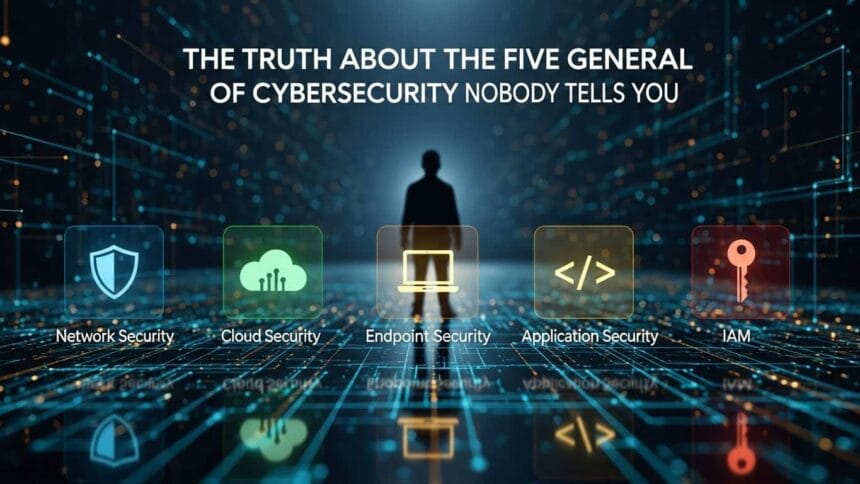
Cybersecurity is no longer just an IT concern or something only big tech companies think about. It affects everyday life. From online banking and work emails to smart homes and cloud storage almost everything we use relies on secure digital systems. Here we discuss Five General Types of Cybersecurity. Yet most people still feel confused about what cybersecurity really means and how it actually works.
- Overview
- Types of Cybersecurity
- 1. Network Security – Keeping Connections Safe
- 2. Application Security – Protecting Software & Apps
- 3. Information Security – Safeguarding Data
- 4. Operational Security – Managing Access & Processes
- 5. End-User Education – The Human Defense Layer
- How the Five Types of Cybersecurity Work Together
- Building a complete security ecosystem
- Key Areas of Cybersecurity Protection
- Critical Infrastructure Security – Protecting Cities & Systems
- Cloud Security – Guarding Online Data & Storage
- Internet of Things (IoT) Security Securing Smart Devices
- Why people are the weakest and strongest link
- Understanding Social Engineering in Cybersecurity
- Emerging Cybersecurity Trends & Careers in 2025
- Conclusion
- FAQs
The good news is that cybersecurity is not one giant mystery. It is built around clear categories each designed to protect a specific part of the digital world.
Most cyber attacks succeed not because technology fails but because people do not understand how cybersecurity truly works.
Overview
At its core cybersecurity is the practice of protecting systems networks data and users from digital threats. These threats include hacking malware data theft ransomware and social manipulation. As technology evolves so do cyber risks which is why modern cybersecurity focuses on layered protection rather than a single solution.
Five general types of cybersecurity form the backbone of this layered defense. Together they create a structure that protects not just machines but also information processes and human behavior. Understanding these types helps individuals and organizations make smarter safer decisions online.
Types of Cybersecurity
Cybersecurity is commonly divided into five main categories. Each type focuses on a different risk area but all are connected. Ignoring even one creates gaps that attackers can exploit.
1. Network Security – Keeping Connections Safe
Network security protects the pathways that data travels through. This includes internal company networks home Wi Fi systems and internet connections. Firewalls intrusion detection systems and secure routers are all part of this category.
Without network security attackers can intercept data disrupt services or gain unauthorized access to connected devices. For businesses this can mean downtime and data breaches. For individuals it can mean stolen information or compromised privacy. Strong network security ensures that only trusted users and devices can communicate across a network safely.
2. Application Security – Protecting Software & Apps
Application security focuses on keeping software secure from vulnerabilities. Every app, website, or digital tool has code, and attackers often look for flaws in that code to bypass defenses within the five general types of cybersecurity.
Developers use secure coding practices, regular testing, and timely updates to reduce risks. Application security also includes authentication controls, user permissions, and encryption within software, all of which play a key role in the five general types of cybersecurity framework.
When application security is weak, even trusted platforms can become entry points for cyber attacks. This is why regular updates and patches are essential for maintaining strong protection across all five general types of cybersecurity.
3. Information Security – Safeguarding Data
Information security protects data itself regardless of where it lives or how it moves. This includes personal details financial records intellectual property and sensitive business data.
Encryption access controls and data classification play a major role here. The goal is to ensure that information remains confidential accurate and available only to authorized users.
In many cyber incidents data loss causes more damage than system downtime. Information security helps prevent that loss and maintain trust.
4. Operational Security – Managing Access & Processes
Operational security focuses on internal rules processes and decision making. It defines who can access systems how data is handled and what procedures are followed during normal operations and emergencies.
This type of cyber security often goes unnoticed but it is critical. Poor operational practices can expose sensitive data even when technical defenses are strong.
Clear policies training and monitoring help ensure that everyday actions do not create security risks.
5. End-User Education – The Human Defense Layer
End user education addresses the human side of cybersecurity. People make mistakes click suspicious links reuse passwords or fall for scams. Training users to recognize threats understand basic cyber hygiene and follow safe practices dramatically reduces risk. In many cases educated users stop attacks before technology even detects them.
This is why human awareness is often considered the strongest and weakest part of cyber defense.
How the Five Types of Cybersecurity Work Together
Each type of cybersecurity covers a specific area but real protection comes from how they work together. A secure network alone cannot protect unsafe applications. Strong encryption means little if users share passwords.
Building a complete security ecosystem
A complete security ecosystem layers defenses across technology data processes and people. Network security blocks threats at entry points. Application security prevents exploitation. Information security protects valuable data. Operational security enforces safe behavior. End user education empowers people to act wisely.
When these five general types of cybersecurity operate together organizations create resilience not just protection.
Key Areas of Cybersecurity Protection
Beyond the core five types cybersecurity also extends into specialized areas that protect modern digital environments. These areas respond to how technology is used today.
Critical Infrastructure Security – Protecting Cities & Systems
Critical infrastructure security focuses on protecting essential systems like power grids transportation healthcare and communication networks. These systems support entire cities and economies.
Cyber attacks on infrastructure can disrupt daily life cause financial loss and threaten public safety. Governments and industries invest heavily in securing these systems through strict controls monitoring and coordination.
As cities become smarter infrastructure security becomes more important than ever.

You might be interested: Messaging Security Agent: Protecting Every Conversation in the Digital Age
Cloud Security – Guarding Online Data & Storage
Cloud security protects data and services hosted online. As businesses move operations to cloud platforms securing shared environments becomes a priority.
Cloud security includes identity management data encryption secure access and continuous monitoring. Since cloud systems are accessible from anywhere strong controls are essential.
For individuals cloud security protects personal files photos and online accounts.
Internet of Things (IoT) Security Securing Smart Devices
IoT security protects smart devices like cameras thermostats wearables and connected appliances. These devices often lack strong built in protection making them attractive targets. Securing IoT devices involves updates network segmentation and monitoring. Without IoT security attackers can gain access to networks through everyday devices.
As smart technology grows so does the importance of IoT security.
Why people are the weakest and strongest link
Humans can make errors but they can also detect unusual behavior faster than automated systems. Awareness training clear communication and a security first culture turn users into defenders.
Organizations that invest in people often experience fewer incidents and faster recovery.
Cybersecurity is not just about stopping hackers. It is about empowering people to protect what matters.
Understanding Social Engineering in Cybersecurity
Social engineering manipulates human psychology rather than technical flaws. Attackers use trust, urgency, fear, or curiosity to trick people into revealing information or granting access. Common examples include phishing emails, fake support calls, and deceptive messages. These attacks bypass technology by targeting human behavior, which is why they remain effective across the five general types of cybersecurity. Understanding social engineering is critical because even advanced systems can be compromised by a single convincing message if the human element within the five general types of cybersecurity is overlooked.
The five general types of cybersecurity form a unified defense strategy. Network security protects connections. Application security secures software. Information security safeguards data. Operational security governs processes. End user education strengthens human awareness.
Together they create a balanced approach that adapts to evolving cyber threats.
Emerging Cybersecurity Trends & Careers in 2025
Cybersecurity continues to evolve rapidly. In 2025 trends include AI driven threat detection zero trust architecture and automation. Remote work and cloud adoption continue to reshape security priorities.
Careers in cyber security are growing globally. Roles include security analysts cloud security engineers threat researchers and governance specialists. Demand is high because skilled professionals are essential across industries. Cybersecurity offers long term stability and meaningful impact.
Conclusion
Cybersecurity affects everyone whether you realize it or not. Understanding the five general types of cybersecurity provides clarity confidence and control in a digital world filled with risks.
By combining technical defenses smart processes and informed users individuals and organizations can build stronger safer systems. Cyber threats will continue to evolve but knowledge remains the most powerful defense.
FAQs
Best Cybersecurity Practices for Beginners?
Start with strong unique passwords enable multi factor authentication keep software updated and be cautious with emails and links. Simple habits reduce most risks.
Is Cybersecurity Hard to Learn?
Cybersecurity can feel complex at first but basics are accessible to anyone. With consistent learning and practice it becomes manageable and even rewarding.
What Is the NIST Cybersecurity Framework?
The NIST framework provides guidelines for managing cyber risk. It focuses on identifying protecting detecting responding and recovering from threats.
How Does AI Help in Cybersecurity?
AI analyzes large amounts of data to detect patterns and threats faster than humans. It helps identify attacks respond quickly and reduce false alarms.
Can small businesses benefit from cybersecurity planning?
Yes. Small businesses are frequent targets. Even basic planning and education significantly improve protection.
Is cyber security only a technical responsibility?
No. Cybersecurity involves technology processes and people. Everyone plays a role in staying secure.