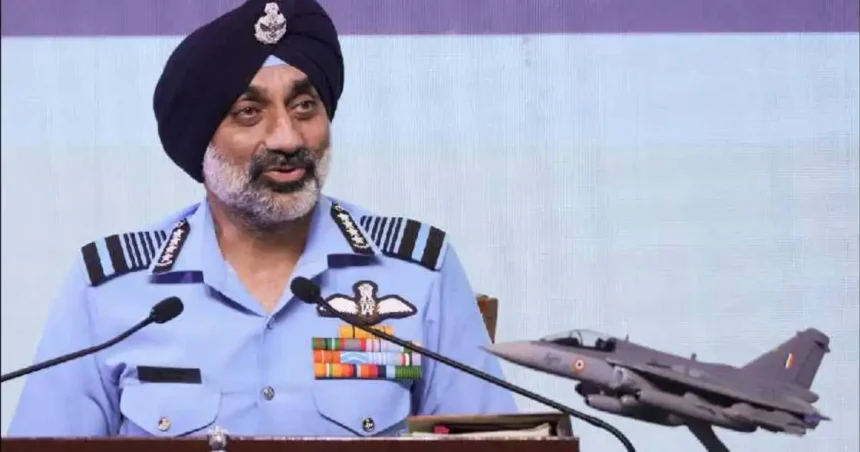
Indian Air Force Chief Amar Preet Singh has claimed that the IAF successfully downed five Pakistani fighter jets, including F-16 and JF-17 aircraft, during intense hostilities in May. The statement, made on Friday, has stirred fresh debate over military encounters between the two nuclear-armed rivals, with Pakistan yet to issue an official response.
Indian Air Force Chief Amar Preet Singh on Friday declared that India’s fighter squadrons managed to down five Pakistani Air Force (PAF) jets during escalated hostilities in May. According to Singh, the destroyed aircraft included both American-built F-16s and Chinese-Pakistani JF-17 Thunder fighters, marking what he described as a significant defensive achievement.
Speaking at a defence forum in New Delhi, Singh said the encounter represented “India’s air dominance” in the region. He claimed the IAF acted in response to cross-border escalations, with Pakistani fighter jets attempting to breach Indian airspace. “Our air warriors responded decisively, ensuring India’s sovereignty was protected,” Singh remarked, while emphasizing that India remains committed to national security.
The announcement quickly drew international attention, given the history of conflicting accounts between India and Pakistan over air combat incidents. Past clashes, particularly the February 2019 Balakot strikes, have seen both countries present sharply different versions of events. Analysts warn that Singh’s latest remarks could further inflame tensions at a time when relations between the two neighbors remain fragile.
So far, Pakistan has not issued an official statement regarding Singh’s claim. In previous instances, the Pakistani military has disputed similar assertions, insisting its air force remains fully capable and that Indian claims are often “exaggerated.” Military experts suggest Islamabad is likely to respond firmly, as such allegations carry diplomatic and strategic consequences.
Regional analysts also point to the potential impact on international observers. Any suggestion that U.S.-supplied F-16s were involved in combat could once again raise questions in Washington, which has historically monitored the use of its fighter jets in South Asia closely. Similarly, China’s role as a partner in developing the JF-17 may come under scrutiny amid rising India-China competition.
Observers note that the timing of Singh’s remarks is important, as both countries continue to modernize their air forces and strengthen defence capabilities. India has expanded its procurement of Rafale jets and indigenous Tejas fighters, while Pakistan has upgraded its JF-17 fleet and strengthened ties with China.
With neither side offering transparent verification of aerial claims, independent experts argue that the “fog of war” often clouds public understanding of such incidents. Nevertheless, Singh’s statement underscores the volatile nature of India-Pakistan relations, where military narratives are deeply tied to national pride and political messaging.
The claim, whether disputed or confirmed, highlights the fragile balance of power in South Asia. As Indian Air Force Chief Amar Preet Singh reiterates his country’s defence readiness, the region braces for possible diplomatic aftershocks and a renewed cycle of rhetoric between New Delhi and Islamabad.