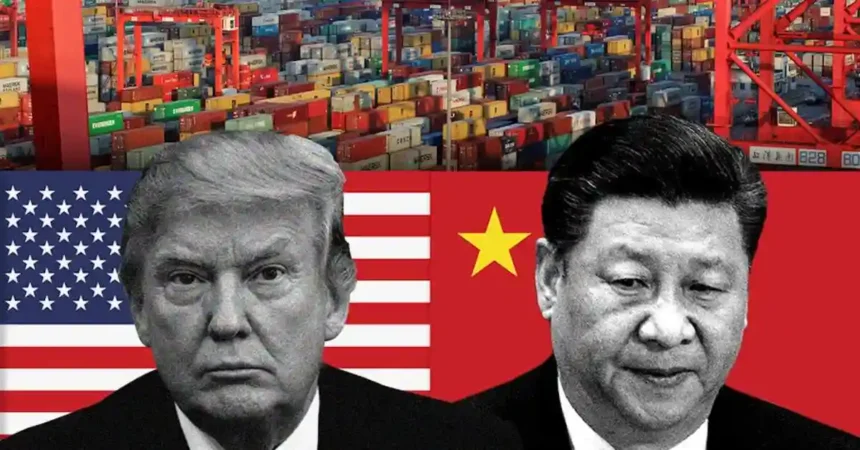
US China trade tensions are pushing China to buy more gold and cut reliance on US treasuries. The insurance sector is now allowed to invest in gold, adding billions to the market. China is also expanding the Shanghai Gold Exchange for global investors. Together, these steps show China’s plan to reduce dollar dominance and strengthen its financial power.
PBOC’s Reserve Strategy
China’s central bank, the People’s Bank of China (PBOC) has been steadily increasing gold reserves in 2025. This reflects a deliberate move to diversify away from US treasuries amid growing US & China trade tensions.
Although purchases have slowed somewhat in recent months, H1 2025 saw about 19 metric tons of gold added to China’s reserves. By increasing gold holdings China aims to strengthen its financial autonomy in a volatile global environment.
Dollar Shift Strategy
China seems to be reducing its exposure to the US dollar, shifting some reserves into gold and yuan denominated assets. Analysts suggest this helps China hedge against potential sanctions and dollar volatility.
The goal is greater leverage in global finance and more control over reserve value especially with US &China trade tensions adding pressure to financial markets.
Insurance Sector Enters Gold Market
In early 2025 China launched a pilot program letting top insurance companies allocate up to 1% of their assets into gold. This is a clear institutional response to US-China trade tensions.
If fully realized, the program could channel over US$27 billion of investment into gold. Several insurers also joined the Shanghai Gold Exchange to trade physical AU9999 contracts expanding infrastructure for gold investment.
Shanghai Gold Expansion
China is opening the Shanghai Gold Exchange to foreign investors, offering new yuan-denominated delivery contracts via Hong Kong and overseas vaults. This is part of China’s response to increasing US-China trade tensions.
To make gold more accessible, it has waived storage, handling and exit fees for foreign buyers for a calendar year. New offshore warehouses run by Bank of China also support this expansion.
- Global Access Foreign participation boosts gold liquidity in Asia and reduces reliance on Western exchanges.
- Investor Push Lower fees and new contracts aim to attract global investors quickly.
Yuan Strengthening Moves
The yuan has reached its highest level against the US dollar in over ten months, aided by hopes of US rate cuts and firmer Chinese monetary policy. Stronger yuan helps China mitigate the economic fallout of US-China trade tensions.
This shift attracts foreign capital back into Chinese equity markets and supports domestic liquidity. But risks remain if tensions escalate or if inflation pressures rise.
Gold as Safe-Haven
Amid ongoing US & China trade tensions, investors and central banks are turning to gold as a hedge against growing global risks. The longer the disputes continue, the stronger gold’s role becomes in safeguarding portfolios from economic uncertainty.
Technical Market Breakouts
Gold has broken out above key resistance levels in 2025, confirming the bullish trend. These technical developments are being amplified by US-China trade tensions.
Analysts point to strong support levels (e.g. around $3,250–$3,300) and recent price reactions that suggest next resistance may head toward $4,000. Investors looking for entry see this as a signal.
Global Impact & Future
China is not only protecting itself in the near term it’s positioning to challenge Western dominance in gold pricing and finance. US-China trade tensions are central to this long game.
With yuan-denominated contracts and foreign vaults China may reduce dependency on COMEX and LBMA. Ultimately China aims to boost yuan’s international role, while gold becomes a foundation of its financial influence.