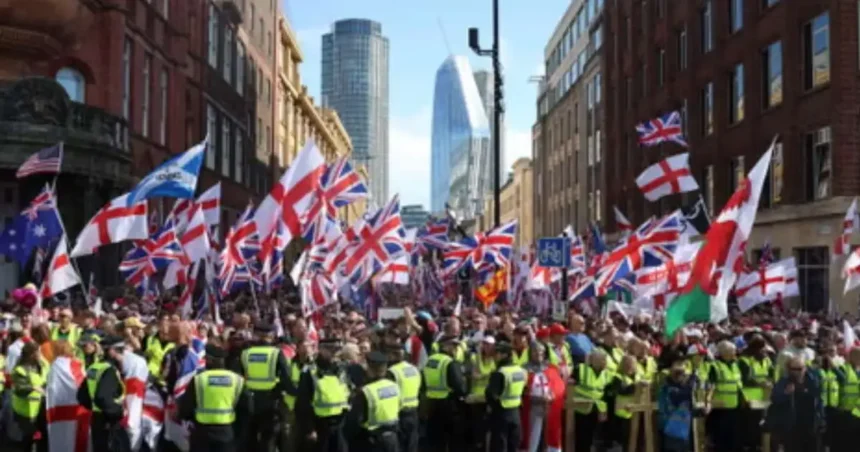
The Unite the Kingdom march in London drew between 110,000 and 150,000 people protesting immigration policies, free speech limits, and government action. Organised by Tommy Robinson, the rally led to dozens of arrests and confrontations with police amid spirited counter-protests. Many see it as a sign of deepening divisions in UK public life.
Massive Turnout and Organisers’ Aims
The march, held in central London, was organised by far-right activist Tommy Robinson (Stephen Yaxley-Lennon). Supporters say they marched in defence of free speech and British identity. Protesters carried Union flags, England’s St George’s Cross, and signs reading slogans such as “send them home” and “stop the boats.”
Despite organisers’ expectations, attendance far exceeded estimates. Police placed the number of participants between 110,000 and 150,000. The scale of turnout surprised both law enforcement and observers.
Clashes, Police Response, and Arrests
While much of the event remained peaceful, tensions escalated as protesters attempted to breach police lines and approached the counter-protesters. Law enforcement reported that 26 officers were injured some seriously including broken teeth, head injuries and other trauma.
At least 25 people were arrested for offenses such as violent disorder, assault and criminal damage. Police used barriers, helmets, riot shields and mounted units to maintain order, particularly in areas like Whitehall and Trafalgar Square where clashes were most severe.
Counter-Protest and Cultural Divide
A smaller counter-protest, organised by groups like Stand Up to Racism, brought around 5,000 participants. These demonstrators opposed xenophobia, racial targeting and nationalism, chanting slogans like “refugees welcome” and “stand up, fight back.”
Observers say the presence of both sides underlines how immigration has become one of the most polarising issues in UK politics. Public reactions have ranged from concern over rising nationalism to worries about threats to democratic norms.
Political Fallout and Public Statements
UK Prime Minister Keir Starmer condemned the protests, calling them “plastic patriotism” and saying they foster fear rather than unity. Other political figures emphasized that patriotism rooted in exclusion or hostility to immigrants risks undermining social cohesion.
Home Secretary Shabana Mahmood pledged that participants who broke the law would face full legal consequences. Police also released images of individuals suspected of violent disorder and urged public assistance in identifying them.
Why It Matters Going Forward
The Unite the Kingdom march is more than a single event it signals shifting public sentiment on immigration, identity and free speech in Britain. Analysts warn that such large nationalistic gatherings could fuel far-right parties or alter political discourse in upcoming elections.
At the same time, critics are raising alarms about how much space is given to rhetoric that many view as hostile or discriminatory. The scope, visibility, and media amplification of this march suggest that these debates will be central to British politics in the months ahead.