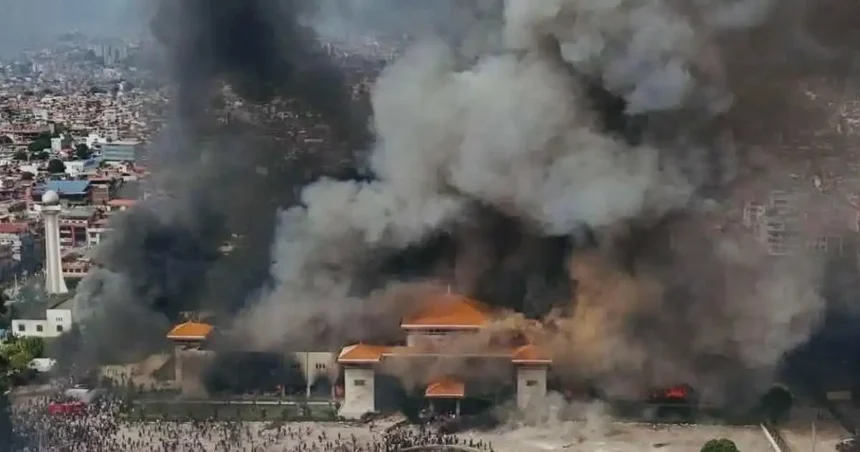
Nepal Parliament is at the center of a growing political crisis after Prime Minister Khadga Prasad Sharma Oli resigned following massive youth-led protests. The Nepal Parliament building was torched by demonstrators, airports were shut, and security forces faced backlash for using lethal force, plunging the nation into chaos
Parliament of Nepal Under Fire
The Parliament of Nepal has become the focal point of nationwide unrest after thousands of Gen-Z protesters stormed the capital, demanding systemic reforms. Demonstrators, angered by corruption, nepotism, and economic stagnation, set fire to the Parliament building in Kathmandu, symbolizing their rejection of the political establishment.
Security forces responded with tear gas, water cannons, and live ammunition. Human Rights Watch confirmed at least 19 deaths and more than 300 injuries during violent clashes, sparking condemnation from both domestic and international rights organizations.
PM Oli’s Resignation Sparks Leadership Vacuum
Prime Minister Khadga Prasad Sharma Oli, who had been under mounting pressure, tendered his resignation after days of unrest. His decision has left the Nepal Parliament struggling to find stability and direction.
Analysts warn that the resignation, rather than calming the situation, has deepened the crisis, creating a dangerous leadership vacuum. Political observers point out that this is not just a change in government but a reflection of Nepal’s growing generational divide, with young people refusing to tolerate decades of corruption and ineffective governance.
Airport Shutdown and Emergency Measures
Kathmandu International Airport was closed as chaos spread, halting both domestic and international flights. Authorities declared emergency curfews in major cities, yet the unrest continued despite security measures.
The resignation of Home Affairs Minister Ramesh Lekakh added fuel to public anger, signaling fractures within the government itself and intensifying calls for accountability.
Analysts Warn of Long-Term Political Instability
Experts argue that the crisis unfolding around the Nepal Parliament mirrors youth-led protests seen in Bangladesh and Sri Lanka, where widespread anger against corruption and failed governance toppled entire administrations.
Ashish Pradhan, Senior Adviser at the International Crisis Group, emphasized that “Nepali youth saw no other option but to take to the streets, demanding accountability.” This movement reflects a broader regional trend of political awakening among younger generations.
Calls for Justice and Political Reform
Protesters have vowed to continue demonstrations until justice is delivered for those killed and injured, and until the Parliament of Nepal initiates meaningful structural reforms. Their demands include transparency, youth representation in politics, and measures to tackle unemployment and corruption.
While Oli’s resignation was seen as a victory for the movement, activists argue it is only the first step in a long struggle to rebuild trust between citizens and the state. They remain determined to pressure lawmakers until visible reforms are enacted.
What Lies Ahead for Nepal
With the resignation of Prime Minister Oli, the country now enters a transitional phase filled with uncertainty. The Nepal Parliament faces the monumental task of selecting a new leader while managing public anger and restoring stability.
Potential successors are being discussed, but with Parliament deeply fractured, achieving consensus will be difficult. Observers warn that without genuine reforms, protests could intensify, further destabilizing the fragile Himalayan nation.